Wednesday, February 18, 2015

Writing "Four Wheel Drive"


Back in the winter of 1991 we were deep into the nuke dump fight with the State of New York. One evening in February, I was driving home from Dalton, where I’d been working with Kate and Rick Hollis putting together the Allegany! newsletter of the Concerned Citizens of Allegany County. For much of the way, I followed the Genesee river, travelling south on Route 19 as the river wound its way north in all its icy splendor

I am a transplant, who came to western New York from the Boston area in 1991 to go to the art school in Alfred. The jade green of the winter river and the thought of my family waiting for me in our little stone house on the hill in Rexville made me realize how deep my roots had grown into this part of the world. It was six degrees as I passed through Wellsville. A light snow was falling and darkness was coming on. It came to me that there were only four wheels and two wool sweaters keeping me safe and warm, and I began to write this song . . .

Four Wheel Drive                  
God bless four wheel drive and two wool sweaters
They’ll keep me alive and carry me home
God bless six degrees and a wind that’s hard and bitter
And a warm heart waiting for me at the end of the road

God bless white tail deer and a winding green river
And the black bear asleep somewhere in the ghostly hills
God bless winter storm and the red pines that shiver
And a small gray stone house up there in the Allegany hills

Chorus:
So let the sun shine in the morning and the moon shine in the night
With Allegany watching, she’s gonna be all right
And there’s a feeling driving home tonight that makes me understand
I’ve grown roots into this land

God bless family farms, they are truly the survivors
And the weary arms that haul the winter feed
By the grace of God, may they grace these hills forever
Through the turning of the seasons from the harvest to the seed

When the hills go dark and the home lights are gleaming
And the good dogs bark, and he’s standing in the door
Then I’ll kiss the kids in their beds where they lie dreaming
There’s a blessing in a winter storm and getting home once more

Chorus:
Add: Allegany’s home, coming home tonight
Allegany’s home, gonna be alright
Allegany’s home . . .


I think this was taken in West Almond--and hey! that's Deb Kirsch standing next to me and that little bit of blue hood is the top of Fern's head. We stopped bringing the kids to what they called the "No Dumps" (non-violent actions blocking the siting commission's attempts to access the proposed sites) soon after this, when things started getting tense. After the April first confrontation in Caneadea, where six senior citizens chained themselves to a one-lane bridge and were arrested, Governor Cuomo called a halt, ruling that a radioactive waste dump could not be place in an unwilling community. Good man. 

Sunday, February 1, 2015

Deeply Inhaling and Exhaling--Reading,Writing, and Cross Country Skiing.


I'm taking a long inhale after submitting the first rewrite of my middle grade novel, Wolfboy, to my editor, Tracey Keevan at Disney*Hyperion. She had so much good input! I work single-mindedly, can't seem to focus on more than one project at once. I live and breathe it 24/7. With this story, about how a boy adopts a wolf pup, which becomes the first dog, I got so deeply into Kai and Uff's story that I began to believe it was true. It is true--in my head. Maybe Tracey will push me deeper with the challenges of creating language usage that sounds ancient without being hokey. Maybe I will find more things to tweak. But it's in a good place right now.

Not being immersed in a writing project makes me feel uneasy. I can work on a rewrite. That always feels safe and satisfying. I'm dying to start something new, but it's time to inhale--and reading is the inhale while writing is the exhale of a writer's life. I want to do a story about a bear. But even growing up in the northeast with a lifelong interest in all things woodsy, I really know very little about bears. Time to read, and think, and live, and dream--believing that the story will come. It will start speaking to me. And then I will start writing it down . .

Meanwhile the snow is fantastic and we cross-country ski every day. The surface is crisscrossed with tracks of deer, coyote, fox, mice . . . Piliated woodpeckers rummage deep into the trees killed by tent caterpillars a few years ago. The porcupine had made himself a deep rut in his habitual crossing place. I keep my eyes open for signs of nesting owls.

We come inside ruddy-cheeked and drenched in sweat, having greeted Toad Hill's resident red-tails, ravens, crows, and sometimes the young eagle. The bird feeder is buzzing as the tide of black hulled sunflower seeds constantly ebbs. It's full daylight when I feed the horses at 5:00 PM now! The other morning I heard the first chickadee's daylight triggered song. I have a stack of books to read in preparation for the www.scbwi.org conference next weekend, but mostly I'm looking forward to opening Benjamin Kilham's In the Company of Bears, What black Bears Have Taught Me about Intelligence and Intuition. 

Thursday, October 16, 2014

The Wizard Returns!

The Wizard Returns: Candle Wizardry is Once Again Part of the Allegany Artisans Studio Tour

A conversation between Bilbo Baggins and Gandalf:
“I beg your pardon, but I had no idea you were still in business.”                                                            “Where else should I be?” said the wizard.  
J. R. R. Tolkien, THE HOBBIT

Like Gandalf from Tolkien’s immortal Middle Earth stories, our local candle wizard, Ken Reichman, is back. After taking several years off from his Whitesville based Candle Wizardry business, Ken has re-opened his studio and is once more creating his beloved, hand-sculpted candles. Inspired by Tolkien’s books, Ken makes wizard, dragon, and fantasy creatures as well as a host of seasonal and animal themed candles, hand-dipped tapers, sand, pillar, and “glow candles” which burn down illuminating the exterior pattern.    

Along with Walker Metalsmiths in Andover, Candle Wizardry is a charter member of the Allegany Artisans. Ken, Steve Walker, and several other local artists, helped form the group in 1988.  Ken started making candles in 1972 but got his start making character candles in 1975 when he realized that by gently heating sheets of specially formulated wax, he could mold it with his hands like clay. He created and developed the method of hand sculpting fantasy figure candles. At the time, Tolkien’s books were very popular. The candles were a hit and for the next 31 years, Ken took them to the Philadelphia Folk Festival and craft shows all over the northeast.

Visitors to the Candle Wizardry shop at 562 Main Street in Whitesville can watch and learn about the process. Ken first makes sheets of wax which is specially blended for just the right balance of malleability and rigidity. Concentrated dye is sprinkled into the hot wax for multi and solid colors. These sheets are later re-warmed in water and the magic begins as Ken deftly folds and twists the wax into his original and constantly evolving designs. Most of his figures have wicks, but occasionally he creates a more elaborate sculpture not intended to function as a candle.

Children especially love to watch the characters come to life—Oh my gosh, a unicorn!  For many area kids and adults, the whimsical creations lining the shelves of the Candle Wizardry studio, have been a long-standing birthday and holiday institution. The LORD OF THE RINGS film series has helped to nurture a new generation of Middle Earth fantasy fans. Ken now works at the David A. Howe Library as an IT technician, but he’s managing to find time to get back into the shop. “I’ve always liked the characters. I don’t want to give up making them,” says Ken. He’s back in business--where else should our wizard of wax be?


For more information on the upcoming 27th Annual Allegany Artisans Studio Tour, log on to www.alleganyartisans.com or pick up a brochure at a local business.


Tuesday, October 14, 2014

Made in these Hills: Allegany County’s Living Treasures


What is handmade? Why do we care? Why would I pay X amount for a handmade item when I could just shop at Made-in-China-Mart and get “the same thing” a lot cheaper?

Manufactured might perform the same function, but it is not “the same thing.” It doesn’t give joy. I have a hand-woven dish towel which I use daily. It cost more than the others in my drawer, but I don’t give a damn about the others. I suspect I will be enjoying this particular, beautiful, sturdy little towel long after my machine-made ones have worn out. The pinks threading their way through the lavenders brighten my life. It pleases me. I don’t know how to weave, nor have I a loom—but I’m glad the maker of this bit of fabric does. I think it’s worth every penny she asked.

I take my favorite mug down from the shelf. It has classic proportions and feels good in my hands. I run my fingers over the subtle rings left by the maker’s finger tips, the dent left at the base of the handle by his thumb. I think of the impressions left on a treasured pot in our collection by an Iroquoian maker centuries ago, and I get chills. This mug used to hold my morning coffee, not just because it is the perfect roomy size for my java addiction and has a beautiful slate-blue speckled glaze, fading into white over the rim—it also has a story.

Fred and I gave mugs like this to all the gents at the rehearsal dinner for our wedding thirty-five years ago. But now this mug, made by one of Allegany County’s Artisan’s, is retired and resides on a different shelf with our permanent collection of local pottery for which this area is so famous. Its maker, Bruce Greene, has passed on. It’s irreplaceable. I could have bought, smashed, and swept dozens of mold cast, manufactured mugs into the dustbin with nary a pang. But not this one. It is handmade. I knew the maker and saw his shop. He didn’t learn his craft overnight. It has character, beauty, quality, or as another Allegany Artisan, Pete Midgely puts it, “honesty.”

Japan calls its working artisans “Living Treasures.” Tucked away in and inspired by these beautiful Allegany hills, are the studios of dozens of artisans, working in a wide variety of materials. Some are preserving vanishing crafts and traditions, from timber framing, to letter press type setting, to precious metal working and gem cutting, to antler and wood carving and joinery, or tile and cook-ware making from local clay. Others express their personal vision in media like watercolor, printmaking, fiber art, or stuffed animals. There’s a world-renowned stone and metal sculptor, a glass blower, a stained-glass worker, and a candle maker extraordinaire. There are people branching into new media, upcycling, playing with whimsy, color, and pure silliness. Sure they use power tools and machines, but the concept, the designs, each little business, is unique and their own. Their creations have the stamp of the maker.

When I visit another Allegany Artisan’s home I am struck by the many handmade things that she and her husband surround themselves with. Marsha Van Vlack is a ceramic artist. She makes much of the art which decorates her home, the tile work in the bathroom and kitchen, dinnerware on the shelves, but she also collects the work of others, cherishing pieces she admires. “Using a unique thing of beauty that someone has made, makes me happy,” she says simply.

Me? I’m a word-wright, writing mostly for kids, trying to get it right. Is what I do handmade? My brain does the molding, machines do the word processing and printing, but it’s definitely original. The only trouble with being part of this remarkable group of artisans is that I can’t leave our own Irish Hill studio during the upcoming Allegany Artisan’s 27th Annual Tour (October 18th and 19th) to see what the other artists are up to this year and do a little shopping for myself and those I love. For one thing, I need a new and special coffee mug. 


To check out the Allegany Artisans and their work, go to www.alleganyartisans.com and pick up a brochure at one of your local businesses. Don’t forget to sign in at each location you visit for a chance to win prizes donated by the artists. See you on the tour!   

Monday, September 22, 2014

A Writer in Love with Words and Life


Here's another flea market find from this summer, a 1943 War Economy Standard edition of A.A. Milne's Autobiography. I had no idea that he wrote so much other stuff: humorous essays and verse for Punch Magazine (he aspired to be editor), and plays (he was friends Barrie). I remember that my grandparents took Punch and also the London Illustrated News. I guess being New Englanders, they thought they should be a little English, but my grandfather did travel there to sell lumber, so maybe he read and liked those publications. I was disappointed that Milne spoke so little about the writing he is most famous for: Winnie the Pooh. He did talk about writing When We Were Very Young as a sort of obsessive test of himself, in a summerhouse, when feeling oppressed by too much company, after saying he couldn't write such stuff. The childhood memories of his relationship with his brothers and parents are delightful. I'm curious to learn more about his wife (and "collaborator," Daphne). Christopher Robin was more often called by the name he gave himself at an early age, "Billy Moon." Milne came across as charming, brilliant, funny, self-deprecating, and a tad egotistical at the same time.

Sunday, June 22, 2014

Wrap-up for Chautauqua East 2014: What will you wrap up in your radish leaf?


When Larry Rosler, editor of Boyd's Mills Press, asked me to contribute a few words for the wrap-up session Friday afternoon, my busy, obsessive brain went into over-drive. Images popped into my head: holiday gifts wrapped up in beautiful paper; fish 'n chips wrapped up in newspaper; pharaohs wrapped  up in endless yards of crumbling linen; silk moths wrapped up in delicate strands of their own making; Cruella de Vil yearning to be wrapped up in Dalmatian puppy fur; the Christ child wrapped up in swaddling clothes; wrapping a child against the cold; Bob Cratchit's scarf; the Big Game wrap-up of plays and scores; a director shouting, "It's a wrap!" after filming a perfect scene; a swagman's meager possessions wrapped up in a handkerchief tied to a stick; Charlotte dropping swiftly to wrap up a fly entangled in her web . . .

And then oddly, I thought of Chibi, the hero of Taro Yashima's exquisite 1956 Caldecott Honor book, Crow Boy, bringing his simple lunch to school day after day: a rice ball wrapped up in a radish leaf.
(Sorry folks, I remembered it as a cabbage leaf and Amazon wouldn't let me refer to that page to confirm it.)

Over all, the concept means to keep and protect something precious. (With the exception perhaps of of Cruella de Vil!)

A lot happened during our week at The Barn in Honesdale, experiencing the offerings of the faculty of Chautauqua East 2014 (see www.highlightsfoundation.org). So I asked those who attended to consider what they would wrap in their radish leaf, what morsels of writing wisdom would they take home to place by their desk? What might sustain them later on their long, sometimes difficult and lonely writing journey? What might help us spin SOME words, SOME HUMBLE words, SOME HUMBLE, RADIANT words? Here's what we came up with:

I started with Patti Gauch's mention in her opening keynote of the concept of Ley Lines which invisibly connect places of inspiration and sanctity, of letting one such line connect us, like Charlotte's silken thread, to this children's writer's haven: The Barn at Honesdale. Here are the others:
Be outrageous
Don't be afraid of breaking rules
Jump with heart into your characters
Find a writing community
Availability--make it understandable
Bravery
Short, punchy sentences (when appropriate!)
The hero's journey
Discovery of craft and self
Solid core of inner strength
Make time
Honesty
Try doing the hard part first
Poetry is not impulse, it requires study and craft
Read it aloud
Use concrete images

What's wrapped in your radish leaf?


Wednesday, May 21, 2014

Why do I Write for Children?

     There's an interesting blog post going around this morning by Marion Dane Bauer, Why Write for Children. Occasionally I ask myself the same question. Did I get stuck in some sort of developmental Never Land? Am I not a good enough writer to write for adults? Is juvenile literature somehow less valuable?
     Those who think it's easy or trivial, have probably never tried it or written anything memorable. I can't say exactly why, but the books I love best to read--and to write--are mostly intended for young people. Once, a writer I truly respect and admire, actually told me that my writing was being wasted on kids. I felt cut to the bone. It was all I ever wanted to do--my personal Olympic quest.
     "Did you like to read when you were a boy?" I asked him.
     "Oh yes, I was a passionate reader!" he assured me. He went on to tell in great detail how much he had enjoyed the works of Twain, Ernest Thompson Seton, Jean Craighead George, and E. B. White. He could recite long verses of Kipling.
     "And do you think your reading as a child had anything to do with the person and the writer you are today?" I asked.
     He paused. "Well, yes. Absolutely."
     "I rest my case." But I couldn't help adding, "You wouldn't have story, language, and the means for putting it together if you hadn't grown up on great literature. What if, like a diet of white bread and sugar, you had grown up on junk? Do our children deserve anything less than the best?"
     I was a shy, sometimes lonely kid. For the most part, my childhood was safe and wonderful, but there were undercurrents of unhappiness, anger, even some bullying. Books meant everything to me, not just as an escape, but as a parallel world every bit as true as this one. I know there are kids out there who feel the same way.
     Maybe, like James Barrie, children's writers are really children who never entirely lost the magic--who never quite grew up. I love to stop and listen to kids and to look at the world as much as I am able to through their eyes: the newness, the moment-to-moment discovery, the joys and tragedies big and small, the funny stuff, the spurts and bumps and metamorphosis of growth! How I loved the man who took time from my parents' cocktail party to teach Cathy and me the dot and line game and tell us a story. Maybe he was one who never quite grew up.
     On rare summer afternoons, our big brother, Ted, who now writes for Audubon and Fly Rod & Reel, told us "badjagerag" stories evolved from Hugh Lofting's Dr. Doolittle tales. There was magic! How I believed in Ted and Dave's adventures in Africa and those glowing green eyes in the hot jungle night!
     These days, Ted's five, grandchildren cozy up next to him at the camp in New Hampshire or call "Pop" on the phone for Crackling Geese, Young "Sloppy," and a fountain of other stories that he has never thought worth writing down. A loss to the world. Ted Williams is an award-winning, fine and respected environmental journalist. He cooks sunfish fillets for the kids, calling then "children's perch" to stretch out a family fish-fry. But actually, the sunfish are entirely delicious too, just a different species. Maybe one day he'll write some of his stories down. It would be a great contribution to the world of literature--juvenile and adult.    


Tuesday, May 13, 2014

House of a Writers Dreams

I'm glowing with joy. Yesterday I signed a contract with a brilliant agent, Brianne Johnson at Writers House, to represent my new novel, Wolfboy (working title). Writing for kids is a tough business. Not that it's cut-throat--on the contrary, in my line of work, I've encountered some of the kindest, wisest, most honest humans I know. It's just incredibly competitive. Editors are overwhelmed. And they have to be able to sell your quirky, blood-and-tear soaked work of heart. Half the battle is just getting a manuscript read. The other half is writing something worth reading.

Bri can do the rest. She can get my work read, find the right publisher, and help me make the story better if need be. Plus, she's an artist herself--a potter, invites puppies over to play and snooze, reads with a cat on her lap, adores The Clan of the Cave Bear, and passionately loves a good book. What more could I ask?


    When I was little, on hot summer nights, we slept out on the porch of our lakeside summer cottage in New Hampshire. Mum read us an eclectic mix: Thoreau, The Hardy Boys, Charlotte's Web, while we watched the great gray orb weaver trapping mosquitos over our own doorway. Ted and Dave told Cathy and me that the shabby old mounted deer head sometimes winked if you looked carefully. There weren't enough cots, so Cathy and I would each pull two of the rattan armchairs with the squeaky turquoise cushions together and make ourselves cozy "boat-beds." From the swamp across the lake, came the booming of bullfrogs and the rhythmic chanting of whip-poor-wills. The air was fishy and piney, laden with the perfume of the sweet pepper bushes that line the shore. Once in a while, as we were dropping off to sleep, a Luna moth would flutter fairy-like to the screen and settle between the fireflies for an ethereal visit. In seventh grade I wrote a story called, Annie's Fairy, which later became The Kingfisher's Gift, published by Philomel Books in 2002 and awarded a Junior Library Guild Honor.

This was meant to be a caption for this photo illustrating the glow I am feeling today. Sorry, I couldn't stop!

Thursday, May 8, 2014

Cave of a Writer's dreams

This is one of the few images I have from our trip to France a year ago, as our camera was stolen in Marseilles, but it's a favorite. I had happened to post a few shots on Facebook and was able to retrieve them. Fred and I visited Pont Vallon d'Arc in the Ardeche River gorge where the incredible Grotte Chauvet was discovered in 1994. The cave is filled with stunning paintings that may be the oldest art in the world, and which rival anything painted anywhere since. Who knew that wooly rhinos once roamed the area? But there they are on the walls, almost snorting and twitching their ratty tails, along with horses, bison, bears, lions, and many other creatures from thirty thousand years ago--but curiously these people seldom or never depicted humans or dogs.

For the past year, I'd been reading everything I could get my hands on about dogs, from old kids' books to Mark Derr's How the Dog Became the Dog, in preparation for writing my novel, Wolfboy (working title). In the cavern, they found the footprint of a boy and a canine, apparently walking side by side. Wolf? Dog? Chills up my spine! Wolf tracking boy? Early dog and boy walking together as friends the same day--or unrelated footprints ten thousand years apart? There are also depressions in the cave floor left by hibernating cave bears, along with the bones of many of those bears. Oh the rich material for imagination!

Chauvet was never opened to the public for fear of the molds which have damaged Lascaux. Fred and I knew we would not be able to enter the cave, but I had read books, studied photographs, and watched the documentary, Cave of Forgotten Dreams, several times. I had come here to see the area and try to absorb the aura of this sacred place. We hiked up the winding trail under soaring cliffs to the entrance which was sealed off like some sort of James Bond stronghold. Conscious of the surveillance cameras trained on us, we peered through the barred gate into the area where researchers don protective clothing before entering. Then we scuttled along the steep, wooded slope a few yards further and found this little hollow in the rock. It was big enough for a person to shelter. Perhaps someone long ago spent a rainy night there.  

Thursday, January 2, 2014

It's the second day of 2014. 7:35. Eight degrees out, a little snow falling. I'm still cuddled in bed with a cup of good coffee and my little dog, George, curled up between my feet. At nine o'clock, Wiz and I plan to cross-country ski with our friend Marsha Van Vlack and her daughter, Marian. But for now, I can get in some writing time when my brain is closest to the dreamworld. My morning routine makes the frustration of flying days filled with necessary tasks and distractions that suck away my work time a little calmer. And it's delicious.

My new MG novel, Wolfboy, is just starting going out to agents. I am filled with hope. It's a good story, and one that hasn't been told much, I think--how the first dog might have been brought home to become part of a human family. I've only found a few other authors who have done it, and mostly they have the wolf just a side character, or are writing for younger audiences.

As I look at the coming months, I need to get some of my unsold work out there. Submit! (How I hate that word!) But I also need to start a new project. I think there is more to Kai and Uff's story, I'm hoping a trilogy. Plotting is very hard for me. I'm trying to look at it from the angle of what would I as a kid like to read? Writing in prehistory has its challenges, to say the least. But I love my characters and I know that more happens to them. Once I get engaged and know where I'm going, it's addictive. But the in-between time it always very difficult.

I can hear my husband clanking around the kitchen, filling the plastic water bucket for the chickens, getting ready to do the morning feeding of birds and horses. Time to go be part of the day, with part of my mind open to inspiration.
    

Wednesday, April 18, 2012

A Big Day Birding


Sunday afternoon, April 18, Fred and I drove first to Brubaker’s pond at the top of the hill west of Whitesville on Rt. 248, where I had been seeing three swans hanging out with a snow goose and a gang of Canadas for the last few days. They first time I’d spotted the huge white birds with my slightly aged eyes, I’d thought perhaps they were sheep. Then I’d opened the new issue of the Conservationist that morning to read that the state had released Trumpeter swans at Montezuma refuge in 2011 and I had to have a closer look. The Trumpeters were supposed to have highly visible green tags on the wings and have legs bands as well. I consulted my Sibley’s Guide carefully on the slight differences between Tundra and Trumpeter swans (Trumpeters have more evenly rounded backs, a longer, straighter bill with never any yellow on lores, and the yearlings tend to be grayer). There they were—still contentedly grazing. Fred stayed back while I moved as close as I could, pausing to study them through my binoculars, until they finally got uneasy and lifted up to circle the fields. The snow goose was the leader and it was stunning to watch the four big birds flying low, the hazy late afternoon sun illuminating their white feathers. We saw no green tags on the swans, though their bills were very black and their necks quite gray. In any case, I haven’t seen many Tundras and it was the best view of a snow goose I’ve had.


Next, we went to Brown’s marsh and were treated to a loon, a small flock of female hooded mergansers, a lesser scaup (?), a kingfisher, and a handsome great egret fresh from the sunny south. Another big, white bird! In the ditches I saw many painted turtles and frogs peering out of the muck, and in the shallows near the parking lot a huge snapping turtle was hanging out sideways, its shell looking like a discarded tire. Fred was sure it was dead, but I saw the head come up once and a foot thrash a couple of times. (The next day it was still there and I thought I could see another shell of similar size under it—a lengthy interlude of springtime snapping turtle bliss?)


Even without driving down towards Genesee to see the new eagles’ nest again, it had been a good outing. Then coming home over the hill from Independence, we spotted a big bird in the middle of the road. A very large, brown bird. An eagle? A turkey? AN ENORMOUS BIRD! What the . . .?


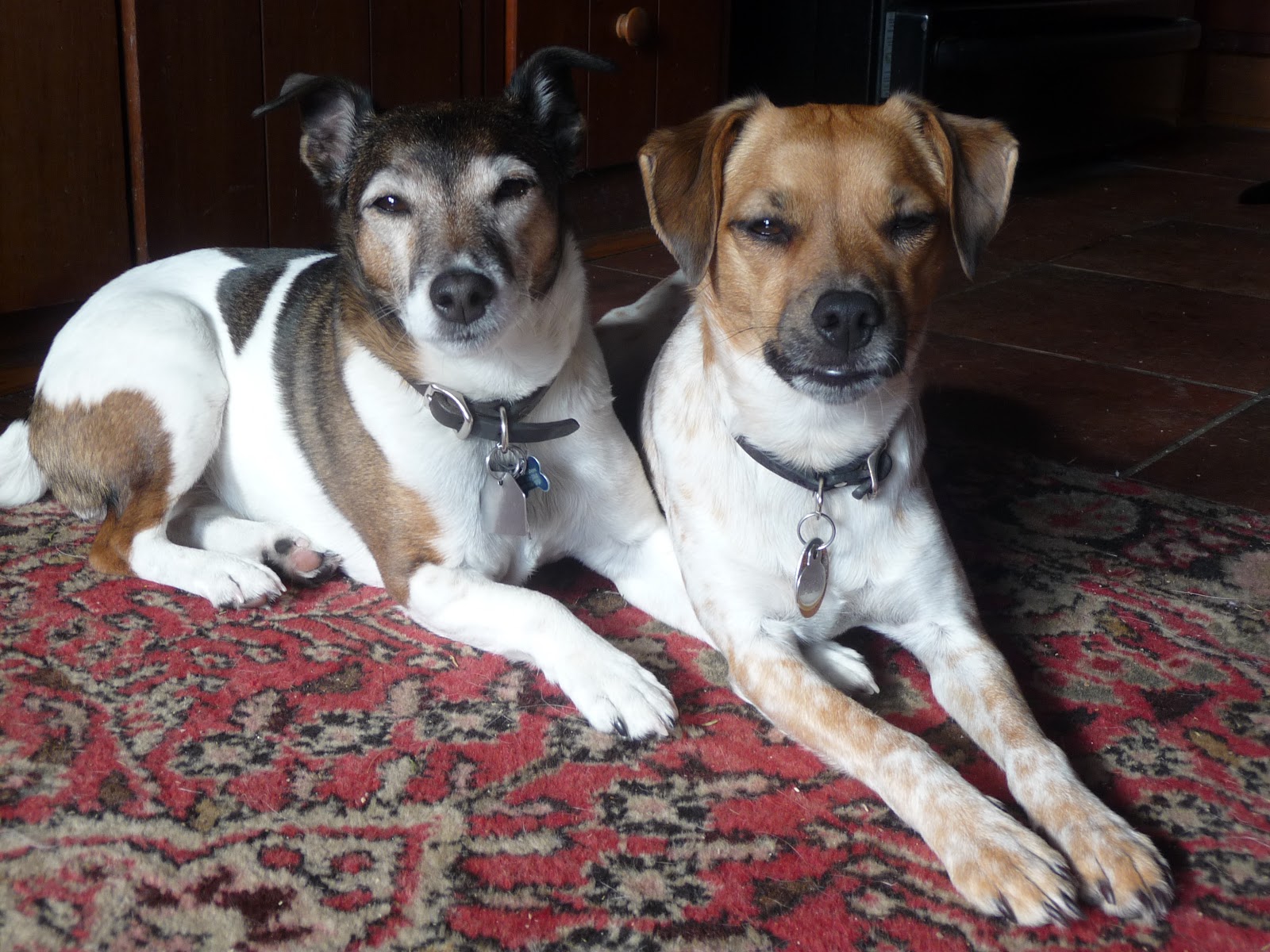
Suddenly we realized it was the escaped emu which has been wandering the country side this spring. It wasn’t very shy. In fact, it allowed us to slowly draw abreast of it, much to the consternation of our little Jack Russell, Georgie. I could have tossed her out the window onto the giant bird’s back, but I held tight—I’m told they pack a powerful kick! It was fascinating to watch the huge, leathery feet as they flattened and contracted with each step, the vast, meaty (and delicious, I’m told) thighs and drumsticks working as it paced slowly along, the heavy, shifting mass of grayish feathers rustling on its back, and its enormous, brown dinosaur-like eyes with their incongruous fringe of eyelashes—wary and reptilian, staring back at us. Dye it yellow, give it a sweeter disposition, and it could have been a visitor from Sesame Street.


A very big bird day indeed!

Monday, March 26, 2012

An Impromptu School Visit in Grenada


When Fred and I travel, I like to bring books along as gifts for local libraries and schools. In Grenada, we stopped at the Catholic school in the village of Sauteurs one morning. The school is located high on a bluff overlooking the crashing waves of the Atlanic Ocean. Nearby, the Leapers Hill Monument memorializes a group of Carib Indians who, back in the seventeen hundreds, leapt to their deaths off the cliff rather than be captured by the French. (Sauteurs means “leapers.”) A few days earlier, we had met two delightful little students at the monument when we were sightseeing and had promised to visit their school while they both tried to look through my binoculars at once.


I was greeted cordially by the headmaster, who immediately recognizing an educational opportunity, expressed his regret that I hadn’t given them some notice that an author was in town. He was right. I need to get over my some-times-still-shy self and realize that after a lifetime of books and words, I actually to have some useful things to say. Next time I will try to plan ahead. I recalled the time there was a mix-up about which presentation I was to do at the Rochester Children’s Book Festival and I managed to pull off my “Writer’s Toolbox” without the actual toolbox. My little red toolbox is full of silly concrete items which illustrate the basics of good writing. But I got my points across by drawing each item on the board as I spoke. “Well . . .” I responded, “I could talk to a class or two right now . . .”


So next thing I knew, the startled teacher had graciously stepped aside, and I was addressing the first of two groups of ten or eleven year old children. First, I drew a rough map of New York State on the black board, showing how the Genesee River flows north and where I live near its source, our own beautiful Adirondack Mountains in the northeast, New York City in the southeast, and explained that I live in the woods very far away from the city. Then I described each of my books, which they would now find in their library. I had brought along two new red plastic water bottles, complimentary gifts from Island Windjammers and the Diamant on which Fred and I had sailed the previous week. Again, the headmaster showed himself to be quick in seizing educational opportunities for his kids, and asked that I award them as prizes for one child in each group who proved to be a good listener and could answer a question posed by me at the end of my talk.


I drew deer and moose for them, my house, and my little dog George. I condensed my tool box to three main concepts. I talked about the troll who creeps up on our shoulders and whispers that our work is dreadful and should be torn-up and tossed in the trash. Does that troll (inner censor) help us to write? No, of course not! So in he goes to our troll jar—one of a writer’s most necessary tools. Next I drew them a big caterpillar reading a book and we talked about how my pet book worm teaches me the importance of reading for good writing. Just as we cannot exhale without first inhaling, we cannot expect to be able to write without first reading—the more the better! Lastly, I talked about my magic earphones and the importance of reading aloud with a critique partner when revising one’s work.

Awarding the water bottles proved very difficult. They had all hung on my words so carefully that I had to ask several questions, “Which way does the Genesee River flow? What is my little dog’s name? How is a moose different from a deer?” In the end I chose the quickest children. When I asked one little boy his name, I had to smile at his answer. Despite his clearly African, possibly Carib, ancestry, he answered, “Angus.” Did he have a drop or two of wild clansman in him as well? There was an influx of Scottish shipbuilders to Grenada in the past. Here was a bit of history preserved in a name. A third time, the headmaster impressed me by reviewing my three points flawlessly for the kids. I sure wished I’d had a water bottle for him and fifty more for the kids!

Tuesday, February 14, 2012

Walking to School in Grenada


Everywhere we went in Grenada, we saw children walking to and from school. They were usually in laughing, high spirited groups. Most wore uniforms. Perhaps some walk to bus stops, but it seemed to me that many of them have quite long walks up and down the very hilly terrain along the narrow, winding roads. We saw moms, dads, and big brothers and sisters leading beautifully dressed toddlers to and from pre-school. What a big time commitment! Education is obviously important.


After a day or two, when we realized how friendly people were, we began offering rides to folks. Many people carry the universal tool-of-all-trades, the machete, commonly called a “cutlass.” Our American sensibilities kept us from inviting people wielding potential weapons to ride with us. We also didn’t feel right offering rides to children, but adults seemed happy to get a lift. It was fun chatting. One young man, living in a remote part of the island, told me he is studying mechanical engineering at a community college. Another wants to be a teacher and asked for my address. I hope I hear from him.


Kids in the states don’t walk much any more, but I was reminded of my own walks to Lincoln and Mystic Schools in Winchester, MA, in the 1960’s. We walked 9/10th of a mile four times a day, in good weather coming home for lunch, totaling about 3 1/5 miles. In winter we brought our lunch, but walked despite the snow and ice. It was also hilly terrain. Luckily it was downhill on the way to school or we would have often been tardy. My sister, Cathy, and I sometimes ran all the way, pretending we were horses. The uphill slog home, lugging books, our clarinets, school projects, etc. could be tiresome. Nobody used backpacks then, so our arms got pretty tired. But on the whole, it was often the best part of the day. Bookworm that I was, I even mastered the art of reading as I walked along the sidewalk, stopping when my peripheral vision noted curbs and intersections. Monday mornings, I brought home bouquets salvaged from the bin behind St. Mary’s Church. In the fall there were fists full of bright leaves. How we loved to kick our feet crisply through them. In the spring I picked masses of lily–of-the-valley, lilacs, and apple blossoms by the old quarry behind the Harwood’s house. When I changed to Mystic School in sixth grade, it was magical walking the brick path next to the Freeman’s greenhouse and pond, exactly like Mr. McGregor’s garden.


I imagine the school children in Grenada, picking fruit and flowers, seeing birds and iguanas, perhaps a mongoose scuttling into the underbrush, passing tethered goats, flocks of foraging hens with puffball chicks, stray dogs, and chatting with neighbors as they pass. There are fishing boats out on the water to watch, perhaps an ancient cannon to visit, careening buses and jeeps to stay clear of. The ubiquitous American school bus has robbed kids in the USA of such good things.

Monday, February 6, 2012

Island Dogs of Grenada

We’ve seen them at other islands in the Caribbean—the ubiquitous island dogs. They’re as colorful and friendly as the people, living their lives alongside humans but mostly in a world apart. There is a different attitude toward dogs in a world where there is no extra money for dog food or veterinary care--where you might think twice before patting a dog. Life is easy for vegetarians in Grenada. Everywhere we saw chickens, goats, donkeys, even cows, feeding happily on the abundant vegetation. But there’s not a lot of food available for carnivores. Many of the dogs we saw were hungry, but otherwise healthy and sassy. They pranced up the middle of the narrow roads as if they owned them. But a few were clearly starving. Many had mange or infections of some sort. It was very hard to see. I kept telling myself, at least I am not seeing starving people.

There is a veterinary college in the town of St. George's. Ten leashed dogs wearing service dog vests boarded the plane for the island of Grenada with us at Kennedy. They curled politely under the seats with no noise or fuss. One did piddle on the floor in the airport, but a three year old child might have done the same. Many of these dogs had been rescued in Grenada and, now healthy and the proud owners of loving and attentive veterinary students, were returning from their first vacation in the United States.

I’m trying to get in touch with someone at the college to learn what is being done for the dogs. We saw few strays in St. George's. At the Grand Etang Park, a prime tourist attraction, I saw three dogs in crates in the back of a pickup who were being taken from the vicinity. I don’t know what was to be done with them. I felt that the hungry strays were being removed from the eyes of tourists. But in the rural areas, we saw many of them.

I began saving leftovers from our meals for the dogs. It was my little canine UNICEF program. When we spied a hungry dog, Fred would slow the jeep, I’d whistle to get its attention, and toss a tidbit.

We saw this one at Windward on Carriacou when looking at a wooden boat under construction. The rope indicates that he belongs to someone and is valued.


These guys trotting up the hill by the Catholic church in Mayreau seemed to epitomize the independent, cheerful personality of most of the island dogs we met. They accompanied us on our walk over the hill to Salt Whistle Bay. Wish I'd been quicker with the camera to catch this image of self-sufficient comraderie.


This one seemed to be near the close of her days, sleeping on the beach at Salt Whistle Bay, Mayreau. Although clearly emaciated, she wasn’t particularly interested in the bread and cheese that I offered her. She did take a small drink from a plastic bag.


This is a very typical island dog look, medium sized, upright ears, short fur, more often than not yellow or light brown. We met him outside a cabin on a hike to the Sulphur Spring near Grenville. I asked the owner his name and was told, “He has no name. I just call him ‘dog.’”


Most of the island dogs were hungry, but otherwise healthy, and quite friendly, though some weren’t. Our newly-met friend, Christina from Germany, was bitten when hiking to a nearby beach. The owner claimed the dog had been vaccinated, but it’s hard to believe that many are. I was a bit anxious snapping this photo as the dog did not seem friendly.


These two fairly healthy characters adorn the steps of a bar outside Grenville.


This is one lucky dog. He is sleek, friendly, wears a collar, and seems to belong to La Sagasse resort. We met him while hiking to a hidden beach described in our guide book. He’d been following a family of British tourists but abandoned them to go back to the secret beach with us. When re returned to La Sagasse, He came along. I think he owns the beach.


This one was a heartbreaker. She was clearly ill and starving. We encountered her while watching some fishermen clean their catch. She seemed invisible to them as she licked the raw guts of the fish from the sand.


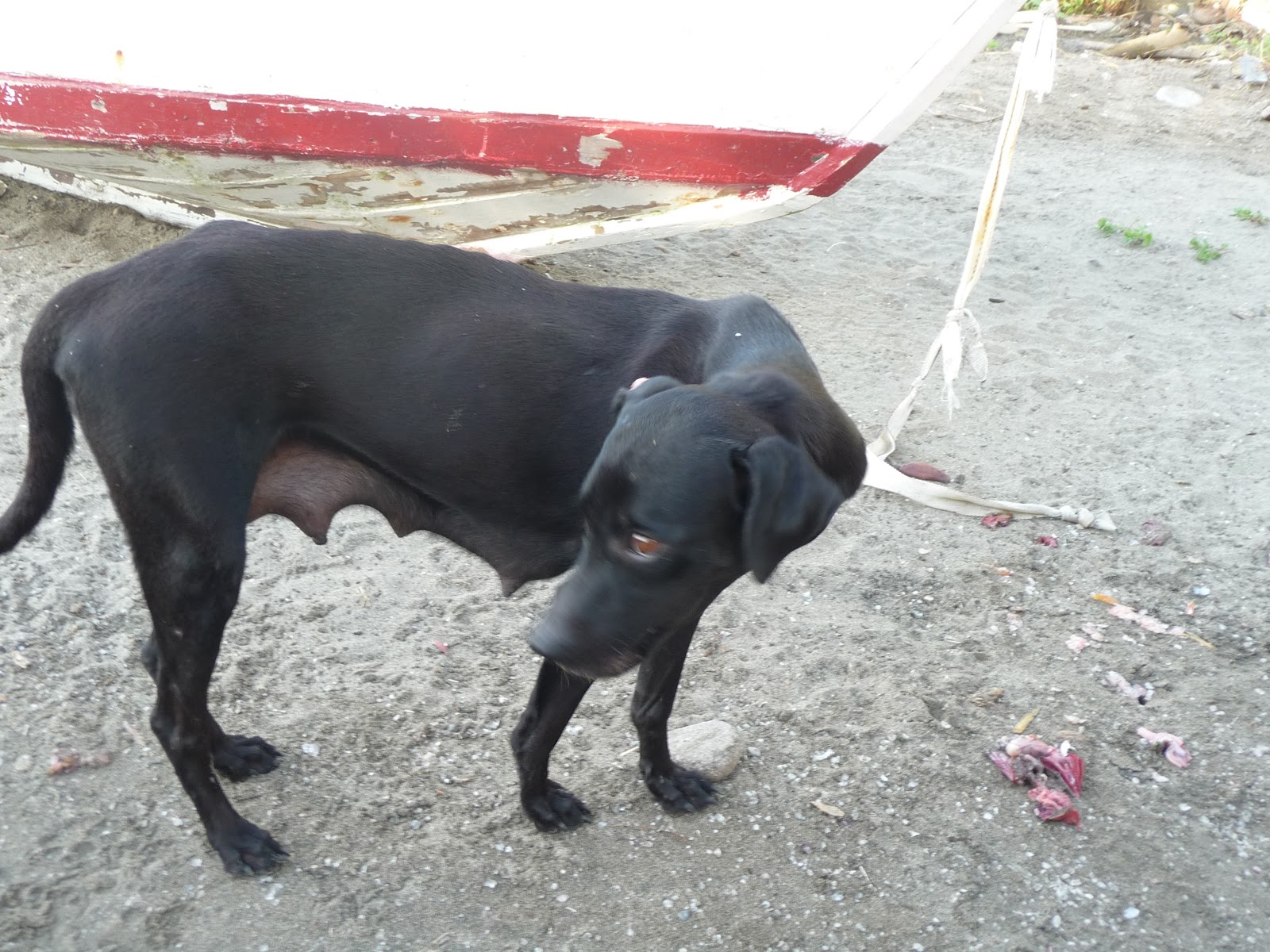
If there was one dog that I could have taken home, it would have been this nursing mom. She shyly approached our car at Bathway Beach and wagged her tail when I spoke to her. We had a nice chunk of cheese and some bread to offer. A bigger, male dog, in much better weight, came up and started snatching the bits I tossed to her. I threw small bits to him and then gave her the whole piece of cheese when he was distracted. Can or should her pups live? Should she live? I knew I wasn’t solving anything except a hungry belly for one day.


I’ve started work on a picture book called Island Dog. If I get it published, I intend for it to be on sale at every cruise boat port in the Caribbean. Any proceeds I make will go straight to the dogs—so to speak. Meanwhile, every time I hug my own, well fed, George and Spike, I pretend I am sending a little love to an Island Dog.


Sunday, January 8, 2012

Getting Ready for Grenada

In just a few days, Fred and I are off for an overdue thirtieth wedding anniversary trip to the island of Grenada in the Caribbean. We'll spend a week sailing and a week at a cottage on the north end of the island. We've been reading up and taking extra long walks to get ready for hiking in the mountains there. The island got hit very hard by hurricanes a few years ago, so we are hoping the trails are open now. I'm looking into Project Stuff Your Rucksack to find out about some small items we could bring with us that might be needed by a school. Of course I'll be bringing some books. I'm really hoping to see a mona monkey and a Grenada dove--and lots of other birds. Santa brought me Birds of the West Indies for Christmas! And we plan to do lots of snorkeling! Here's a favorite shot of us resting after a hike at Carter Notch in the White Mountains of New Hampshire. We probably won't need the polar fleece for Grenada! 


Thursday, January 5, 2012

Christmas Bird Count on Toad Hill

I wasn’t going to do it. Ronnie had asked me to go on a Christmas count with her and I’d declined. I’d neglected my work so badly over the holidays. It’s frightening how much time I spend on Christmas. It’s a sort of love/hate vortex that I just can’t stop myself from being sucked into. The New Year is fresh energy. Days lengthening. Creative juices flowing.


It was only to be a short walk for some exercise. Fred had twisted his back, so it was just little dog, George, and me. January second. Windy flurries and patches of sun. A thin snow cover. I headed out back along the trail that skirts the brow of the hill behind the house.


There was a twitter and flurry of two tiny birds doing acrobatics on the ends of some maple twigs. Not chickadees. I was suddenly alert. But I’d never see them with these fuzzy 58 year old eyes. Ah, but they came closer! Curious. Friendly. The eye stripes and bright yellow Mohawks were unmistakable. Golden Crowned Kinglets!


Okay. This must be a message. No husband to get impatient. My work can wait an hour or so longer. The Murphy’s law of binoculars is that if you don’t bring them along, you will wish you had. I raced back to the house for my brand new ones that Nikon so kindly sent to replace my old pair with the faulty eye rings.


The kinglets had moved on. But maybe I could scare up some grouse. I had read that their numbers are declining, but I think we still have a healthy population on Toad Hill. It would be good to report some. We walked behind the old Scotch pine plantation that the loggers ripped out last fall and fed to the chipper. They were planted for Christmas trees in the fifties, let go, and now are slowly dying off. These bare patches look like war zones right now, but the native trees will come back and create a healthier forest.


George scouted the edge of some brush piles, and pouff! A grouse zoomed out and veered into the woods like a low flying fighter plane. “Get ‘em George!” I called, but she is clearly not a bird dog. Tail waging, she snuffled her muzzle into a tuft of snowy grass. Mice are more her style. I stomped among the brush piles. Pouff! Pouff! Pouff! Out rocketed three more grouse.


We crossed the road onto the old Kane farm. With the Scotch pines gone, it’s easier to imagine a dairy farm and pastures here. Last fall a pair of blue birds hung around for some time. It will be interesting to see how the birds like all this clear cutting. The rough foundation of a tiny school house can be found on the Lyons Road. I can picture ten or so kids from these several hilltop farms gathering here for lessons. Before those families, this was wilderness. Such a short history of Caucasian influx.


I tramp up through the old orchard which Fred is reviving with six new trees and judicious pruning of the gnarled and lonely survivor—a tasty Snow apple. A red tailed hawk lifts out of the spruces. These also were planted, but they are healthier, so we are leaving them. The hawk is so huge that I am transfixed, waiting for the turn and flash of the bight rusty tail. I feel a surge of joy. Winter is far from dead and dull!


I have hardly lowered my glasses when there is a wild and rowdy barking overhead. A flock of Canada geese, perhaps ninety strong, are heading south. Now? Well, there’s been barely any snow, and winter is still very young.


At the edge of Jerry Smith’s field, I step out into the open beside a round bale to take in the view and gaze at the blustery sky. Patches of blue, but the Whitesville valley is socked in with steel gray. I duck back across the hedgerow. Maybe I can spot some turkeys behind Book’s cabin. I am cruising down the trail that borders our south boundary when I look off to my left. What the heck bird is that? It’s huge and long. Bluish gray. For an instant I think great blue heron, but it’s too late for one. The bird cruises closer over the hayfield, wheels, and suddenly the underside is exposed, starkly black and white. Gorgeous. A rough leg? It’s too early for them to have come down from the north isn’t it? I watch until it is out of sight.


No turkeys. Oh well. It’s been pretty satisfying. Back at the house I check with Sibley and decide that the gorgeous bird was a male harrier. The feeder is as busy and competitive as Black Friday at the mall. Everyone is stocking up for a drop in temperature and a bit of weather. I make sure the cats are in. I'm trying to only tlet them out at night these days. George happily sheds her polar fleece coat and heads for the couch. My cheeks are pink and tingling. Now it’s time to hit my desk.

Tuesday, December 27, 2011

Tree Trimming 2011 (It sounds like a college course.)


In the 1950’s a former owner of our property planted many acres to Scotch pine and spruces for Christmas trees. When we came to Irish Hill Road in 1980, the blocks of Scotch pines had become impenetrable jungles, perfect hideouts for deer. Gradually, porcupines and disease were killing them off. The spruces fared better, growing into handsome stands where crows and blue jays love to nest. All over the property seedlings from those plantings have sprung up.


Fred and I both come from traditions of wild Christmas trees. My family cut willowy hemlocks at our camp in New Hampshire. The Beckhorns cut bushy little white pines from Grampa Gach’s farm in Alfred. In our youth we both worked at Stutzman’s Christmas tree farm in Hornell and we well know how a nicely pruned Christmas tree should look, but we’ve always been happy with our “Dr. Seuss “ trees, as Fred sometimes calls the more unruly ones. Sometimes we have cut a big tree and lopped off the top. Most years we locate a suitable one growing on our property right alongside Irish Hill Road.


This year we found our tree right across from Fred’s shop. We’d passed it many times with a thought towards the holidays, but the little spruce’s double trunk always nixed it. How could we ever get it into the stand? The young evergreens that spring up in the ditch along the south side of the road shade it and ice remains here long after it has melted other places. They need to come out anyway. Well, let’s just take a look. . . Lo and behold, the double trunk had split from a single stem eight inches from the ground—just enough to fit into the stand. It was perfect. Once set up in the front room, there was no room to actually put a gift under the tree, but no matter.


With the kids grown, decorating is my business. Football is Fred’s. But this year I made a bargain—you put on the lights and I’ll handle the ornaments. It worked. He dutifully tackled the job—but of course I found myself helping to untangle strings, tightening bulbs, and replacing duds. It was fun doing it together. Now I was in the mood. Fred retired to the couch and the game and I, blind and mostly deaf to the NFL or whatever FL was running roaringly around on the screen—set to work.


My husband is an apple tree pruner, a fire wood cutter, a wood butcher, and furniture builder, but he is not a tree decorator. Well, what self respecting woman would trust a man to trim a tree anyway? I ask myself. There’s an art to it. You can’t hang six ornaments on one branch, fragile ones within cat reach, or the best ones at the back—as my man has been known to do—and he may be a wood artist, but you don’t want to set him loose with a box of tinsel.


Now if you’re going to decorate something, a tree is a damn good choice. There are all those branches! Every year I tell myself, you don’t have to put all the ornaments on, but every year, one by one, each with a memory, finds its place. There is the little black ceramic sheep with wool made by pressing clay through a sieve that Fern made at Gammy Lou’s house a quarter of a century ago. It sounds better than it looks. Usually I have hung it low, but this year my newly married older daughter is spending her first Christmas with her husband in Colorado. It is suddenly precious. I place it high in the front. There are all the hand made ornaments: chickadees, Santas, reindeer, rocking horses, a miniature basket full of tiny balls of wool with pins for knitting needles. My sister Cathy has given them to me over the years. She makes them for her church bazaar and always sends me the current year’s model. I could decorate the whole tree with them!


But I can’t leave out the scrollwork star that my high school friend Shiori made, or the stained glass star that Ken made, or the real starfish star. I hang all three stars in the top with the cheap K-Mart angel that Fern and I bought when she was three and still called it the “Ball Store.” I have to set the angel high enough above the top white light so that it doesn’t look as if her feet are burning up. There’s the crudely carved wooden squirrel that I bought from a boy with muscular dystrophy the summer I worked for the Frontier Nursing Association in Kentucky. His mother hated to part with it, but they needed money and I loved it so much that she relented. I feel badly about buying him from her now, so every year I make sure to honor this little squirrel. I hope he carved another. There’s the tiny paper and glitter crèche from Loudonville—at least as old as I am. There’s the porcelain Beatrix Potter mouse, Hunca Munca with her babies, that Aunt Shirley sent me when I was first married. There’s the little wooden sled that I painted with the words "hope" and "joy"  when, in 1982, I was miraculously pregnant with our first child. There’s the sea-blue, blown-glass orb that Spring bought as a little girl on a visit to Frankenmuth, Michigan which will go to her tree when she has a home of her own. Each ornament has a story. I revel in Christmas past as I create Christmas present.


A week later, it is Christmas Eve and Spring and her dad have both gone to bed. But I am still unwinding from the night’s festivities. I help Santa stuff Spring’s stocking, tuck a couple of things into Fred’s and mine, and find gift bags for the dog toys. Poor old Spike’s Christmas present is a bag of tasty pill pockets. The Jack Russells will be sure to gratify us by finding their gifts, snuffling their noses into the bags, and digging out their new toys.


Then I pour myself a little Grand Marnier in one of the surviving delicate pink liquor glasses from my parents’ house, recalling the Christmas Eve I was allowed to sip my first crème de menthe—perhaps from this very same glass. I turn out all the other lights and sit a moment to sip, and savor the magic of the tree. Everything is done now: the baking, the cards, the making, the shopping, the wrapping, the decorating. Christmas can come in now.


But wait! The white light at the top of the tree under the angel is out! I shuffle to the cellar, find a new bulb, and unmindful of the glass of champagne I had a t Jeri and Ken’s house earlier and the Grand Marnier just now, climb the kitchen stool and screw in a new one.


It doesn’t work.


Doggedly, I return to the cellar for another. Yes! We have white light at the top of the tree, and an angel and stars!


There is one more sip in my glass. Not a creature is stirring. The little wild, double- stemmed spruce glimmers and glitters. Mum used to wrap all her gifts in shiny paper to enhance the shimmer. This year’s tree is truly beautiful—as always, the best one yet. But are there too many red lights? Should I put in a green one there, mid-way to the left? That’s it Susan! Sternly I send myself to bed and into Christmas future.

Monday, November 28, 2011

Apple Daze

Bubble Bubble, Toil and Trouble

Aching joints and endless scrubble

Bubble bubble, toil and pleasure

Fill the hold with apple treasure


The apples are in. Yesterday I finished a last task, canning five gallons of cider. Now, aside from taking stock of the rosy fruit crowding our fridge and root cellar, watching for those rotters that might spoil a whole box, and perhaps making another batch of applesauce, we are done. It was a bumper year for our little Toad Hill Orchard after two barren seasons. At last we feel like apple farmers. When the sun shines you make hay and when the orchard bears, you put away fruit—who knows what we will get next year.


When we bought our original thirty acres in 1980, there was a pair of big old apple trees in the little sloping field next to the road, a Baldwin and a Snow. The former is a venerable New England favorite cooking apple, the latter a crisp, luscious “eater” with snow white flesh and cherry red skin. We knew them from our years working in orchards in New Hampshire and the Champlain Valley. I can imagine the first settlers in Whitesville traveling out toe western New York with these two precious and essential apple trees which would eventually fill their cellars—as ours is filled this year.


Our second spring, we planted about thirty trees of many varieties to keep the two elder trees company. Hopefully the original chart is somewhere in Fred’s desk—the untidiness of which is only surpassed by mine. Perhaps one winter day I’ll take on the project of digging it out. Several of the trees are planted too closely and they all need to be pruned to accommodate ladders. Every spring for the fleeting few days that the trees are in bloom, we savor the ethereal scent and beauty, and hold our breaths hoping that frost and rain will hold off enough for the bees to do their work. It’s an organic orchard. We could improve our management, but we have never sprayed. We’ve had some good crops in past years, but nothing like this year.


We two fifty-eight year olds felt like we were in our twenties again, climbing ladders and limbs with one ratty old picking bag and a canvas shopping bag—until evening when aching joints reminded us of our age. Twigs tugged at my hair and leaves slipped down my shirt. Geese winged southward across the sky. Ravens circled overhead. Perfect apples are rare without chemical assistance. I tuck especially lovely ones into my jacket pockets. Sometimes I find one so irresistible that I crunch right into it on the spot. Eve had it right. Apples are definitely meant to be eaten. And there is nothing like picking apples on a bright autumn day. One afternoon Mom and Dad Beckhorn, both eighty-one, helped pick the lower branches, Dad from a lawn chair using his metal grabber. Later the two of them make and can a big batch of sauce in my kitchen. We reserved a sweetly laden little tree for my six Girl Scouts to pick to make into apple crisp for one of their meetings. I’ve made apple pie, kuchen, sauce, cider, and one batch of deep red crab apple jelly. The deer have been busily cleaning up drops and I’ve been giving our three horses armfuls of apples every day.


Fred has become a fanatic hard cider maker, traveling to western Massachusetts to attend workshops, and collecting wild fruit and special varieties to add to his blends. He went to Lains’ Cider Mill in Canisteo to press large batches, three times, some of which we sold fresh. He rebuilt our antique press to do small specialty mixes. (Unfortunately the grinder is horribly inefficient and it’s a bear to turn the handle, especially when grinding hard, small apples. But the exercise is great!) Now the cellar audibly gurgles with many yeasty, fragrant brews, one mixed with black currants, another purely from wild varieties.


There is an amazing difference in apples. One of our favorite findings this year is the pale yellow, thin skinned Calville Blanc D’Hiver (white winter). Our daughter Spring, home for the holiday weekend, made apple tart with it, crumbly with butter and ground almonds. Wow. Everywhere Fred goes, he spots wild trees—potential taste discoveries. I roll my eyes. I’m ready to be done with the harvest. With Spring, we pick up yet more small, hard, wild apples for her to make chutney. “That’s it!” I say, walking back to the car. “I am finished picking apples this year!” We drive up the driveway. It’s satisfying to see the trees bare except for a few stray apples that the deer and grouse will enjoy. High in the branches of the tall old Baldwin tree, the sun catches a tantalizing cluster of bright red fruit, enough for a couple of pies . . .


Monday, November 21, 2011

Wolves in the Neighborhood


Ah-roooooooooh, ah-roooooooooh! Ooooooooooooo . . .


There is no translating the sound into human language or writing. We share the same vocal range, but only Canis lupus comprehends the message in the undulating vowels, the drawn out, sweeping, or staccato rhythms, the rising and falling tones. The sound is riveting, joyous, sad, mysterious. It is the voice of wildness. Ever since I read Little House on the Prairie, Julie of the Wolves, and The Call of the Wild, I have longed to hear a wolf howl. On occasion I have heard my own tail wagging creature, who shares 98% of her genetic material with wolves, croon her own eerie little song, but it’s not the same.


Yesterday I heard wolves.


One of the things that I like best about cities is that they are fun and exciting to visit, but you can leave them quickly behind. Head north less than an hour from the Big Apple and you will find The Wolf Conservation Center. www.wolfconservationcenter.org. Yes, you are still in the suburbs, but here in 27 acres of hilltop forest, you can meet wolves that are part of a program which is working to bring Mexican red and gray wolves back from the brink of extinction, and which is educating people about the true nature of wolves. They won’t eat your grandma, but they will eat the slow, the weak, and the sick ungulates and help bring ecosystems back into balance.


Here in western New York, I can’t plant so much as a white pine tree without putting a cage around it to protect it from the ravenous, swollen deer herd. I love deer—precious dappled fawns, big eyed does, and heart stopping bucks silhouetted against misty pines—I love deer in healthy numbers, and deer on my dinner plate. Maybe we need a few more wolves back in their rightful place in the world.


It was an unforgettable day. I met “ambassador” wolves who are socialized to humans. The two yearlings Alawa and Zephyr, played in their enclosure, leaping, delighted and begging for treats and attention. The autumn sunlight glistened on their fur. Each wolfed down, in a couple of minutes, a chicken carcass that I might have stuffed for Sunday dinner, tenderizing it first in their powerful jaws. The elder wolf, Atka, visited aimiably, then lay down and posed as if he were expecting Ernest Thompson Seton to set up an easel nearby and paint his portrait. I glimpsed two rare Mexican grays in their wooded enclosure. If you “hack’ a captive born wolf pup into a wild wolf mom’s nest of pups, she will adopt it 100 percent of the time.


I’m sorry my computer wan’t read my photos today, but you can log onto the WCC website. The Wolf Conservation Center needs our help to win a $25,000. grant from the Chase giving Program. You can help if you are on Facebook by going to www.nywolf.org and clicking on the link on the left.


Ah-roooooooooh!

http://www.nywolf.org/

Sunday, November 6, 2011

Why I Write

A rare day of brilliant sun and blue sky! I have bulbs to tuck into the ground for the winter, and a little horse in the pasture who is itching for a good gallop. I've been working on a collection of poems about my four legged friends. I'd like to illustrate them. Just trying to find time and courage. . . Yesterday at the Rochester Children's Book Festival it was exciting to meet readers who loved my books. One little girl had worn out her paperback copy of Wind Rider and was buying a hardcover, plus two for friends. That's why I write--for that one reader who connects. Here's a fun photo of one of my first riding experiences at age three in 1956. My brothers took lessons at Stewart's stable near where we lived in Loudonville, NY. They would let Cathy and me tool around on Trigger, a Shetland of un-numbered years. He was a great babysitter. Cathy was the only one who could make him canter. We have that documented on home movies that my dad made.